Something has shifted in the way we disagree. The argument itself is rarely the problem — people have always disagreed, often loudly. What has changed is the speed at which a difference of opinion becomes a difference of moral standing. To be wrong, increasingly, is to be suspected of being bad.
This is the question underneath almost every online quarrel, every family rift, every dinner that ends early: have we forgotten how to think someone is wrong without believing they are evil?
The compression of disagreement
A conversation carried out in person has a natural give. You hear a hesitation, see a wince, catch the half-smile that says I’m not sure I agree but I’m listening. Tone does most of the work of mercy. Online, all of that collapses. A sentence travels without its context, arrives as a verdict, and is answered as an attack.
You can think someone is wrong without believing they are evil. Most of human history depended on this distinction.
Strip away tone and timing, and disagreement hardens into position. We stop arguing about the thing and start arguing about the person — what they must believe, what kind of person would say that. It is faster, and it is more satisfying, and it is corrosive.
What we lost when we lost the table
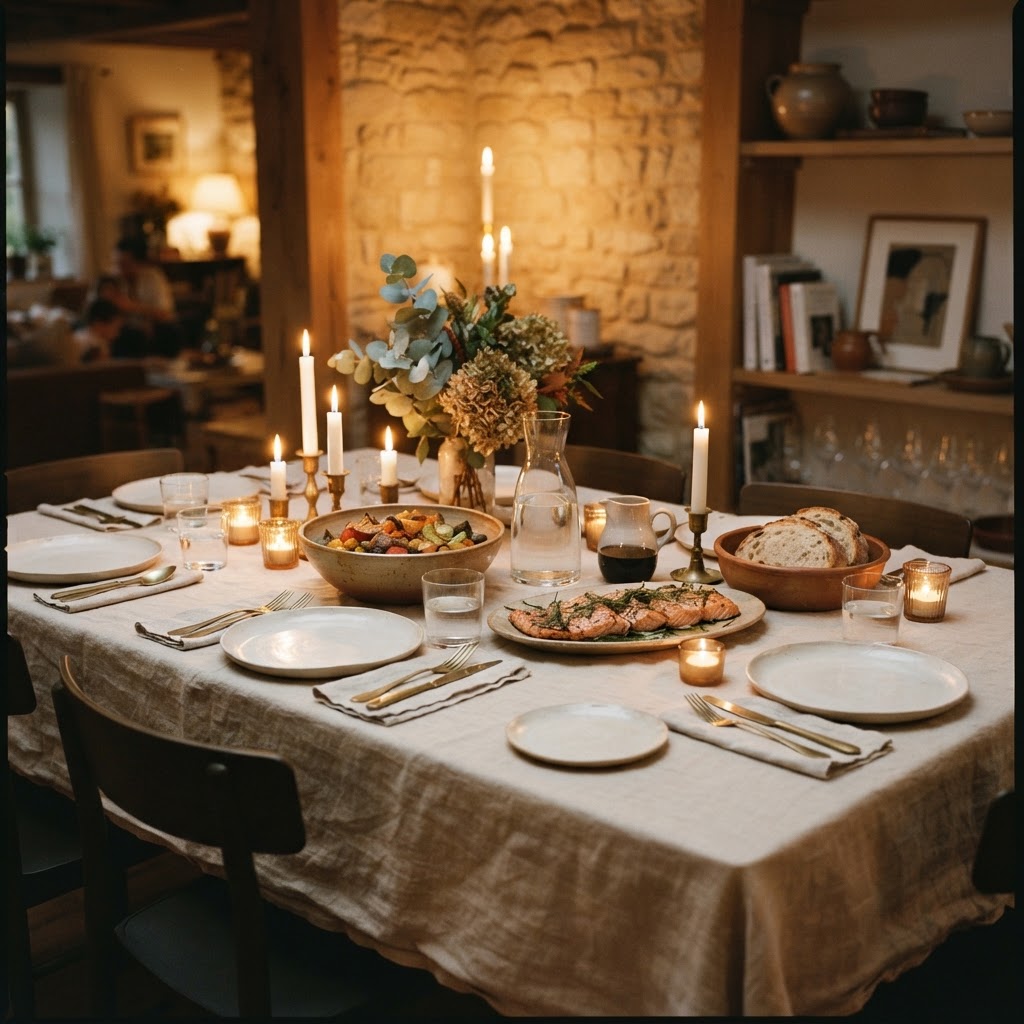
The dinner table was never really about dinner. It was the apparatus by which people who did not entirely agree learned, over years, to sit together anyway. The uncle with the impossible opinions. The cousin whose politics made you wince. You passed the potatoes. You changed the subject. You discovered, sometimes, that the person you disagreed with was also the person who had shown up for every difficult moment of your life.
That is a kind of training. It teaches you that a human being is larger than their worst opinion — that the whole person cannot be reduced to the single sentence you most object to. Lose the table, and you lose the classroom.
The difference between arguing and warring
There is a difference between arguing and warring, and we have mostly stopped teaching it. To argue is to believe a shared truth is reachable — that the other person, however mistaken, is engaged in the same project. To war is to believe the other person is the obstacle, and that the only acceptable outcome is their surrender or their exit.
We argue with people we still consider ours. We wage war on people we have decided are not.
We argue with people we still consider ours. We wage war on people we have decided are not.
The shift from one to the other usually happens before anyone notices. It is worth noticing.
How to differ well
None of this means avoiding disagreement. A publication that never published anything contestable would not be worth reading, and a friendship that never tested a real difference would be a thin one. The case here is not for less disagreement but for better disagreement — for the kind that remembers the person across the table is, in fact, a person.
A few habits help. Assume good faith until it is truly impossible. Ask a question before making an accusation. Distinguish what someone said from the worst reading of it. Notice when the conversation has stopped being about the subject and started being about winning. And remember that the people who taught you most were rarely the ones who agreed with you.
The two-year test
Before publishing or posting anything in anger, ask the only question that matters here: will this still be worth saying in two years? If it will not, the odds are it is not worth saying now — at least not in that tone, to that audience, with that permanence.
A small, radical act
In an age that rewards contempt, the willingness to disagree well — firmly, honestly, and without hatred — is almost subversive. It refuses the easy reward of being outraged. It insists that the person you cannot stand might still be someone you could share a table with.
We don’t need to agree. We do need to be able to have dinner. And perhaps the dining table was never really about dinner.
Social Hook
WE DON’T NEED TO AGREE. WE DO NEED TO BE ABLE TO HAVE DINNER.
Campaign Artwork