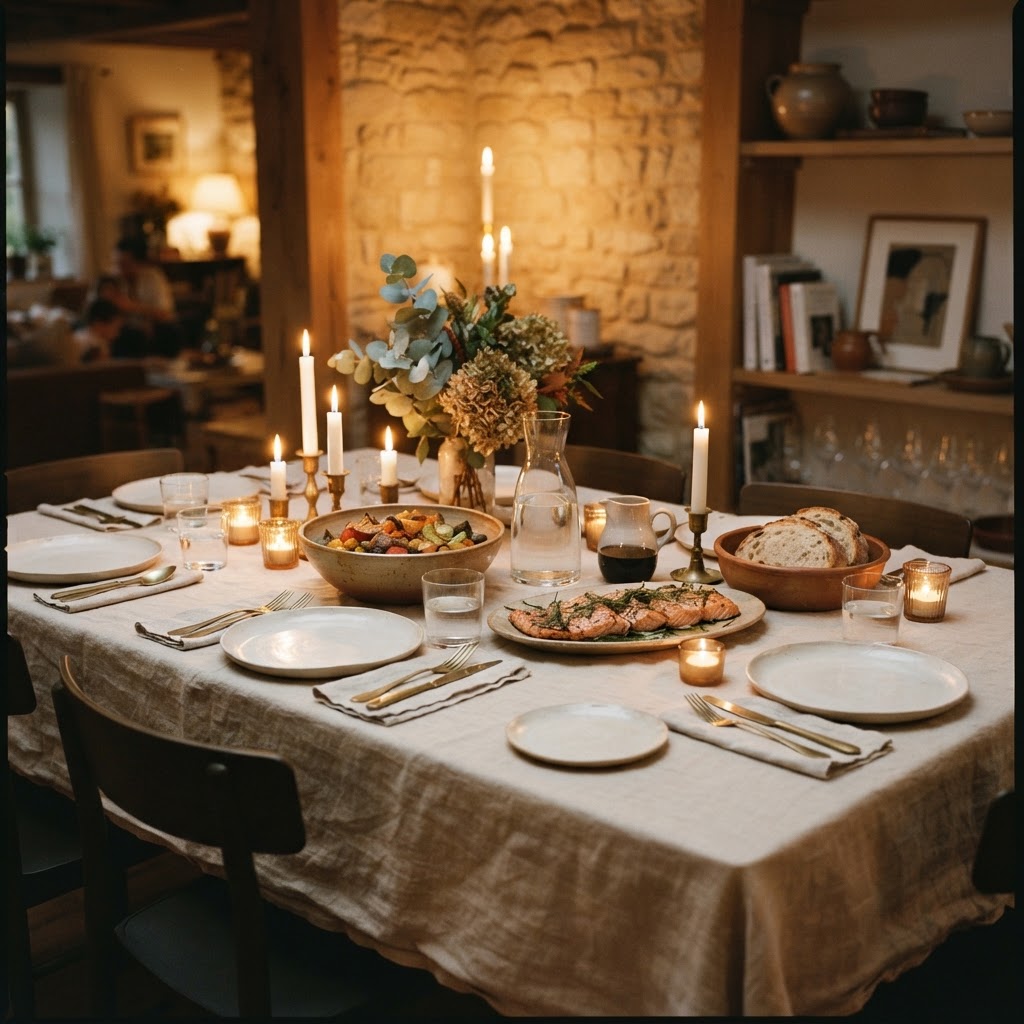
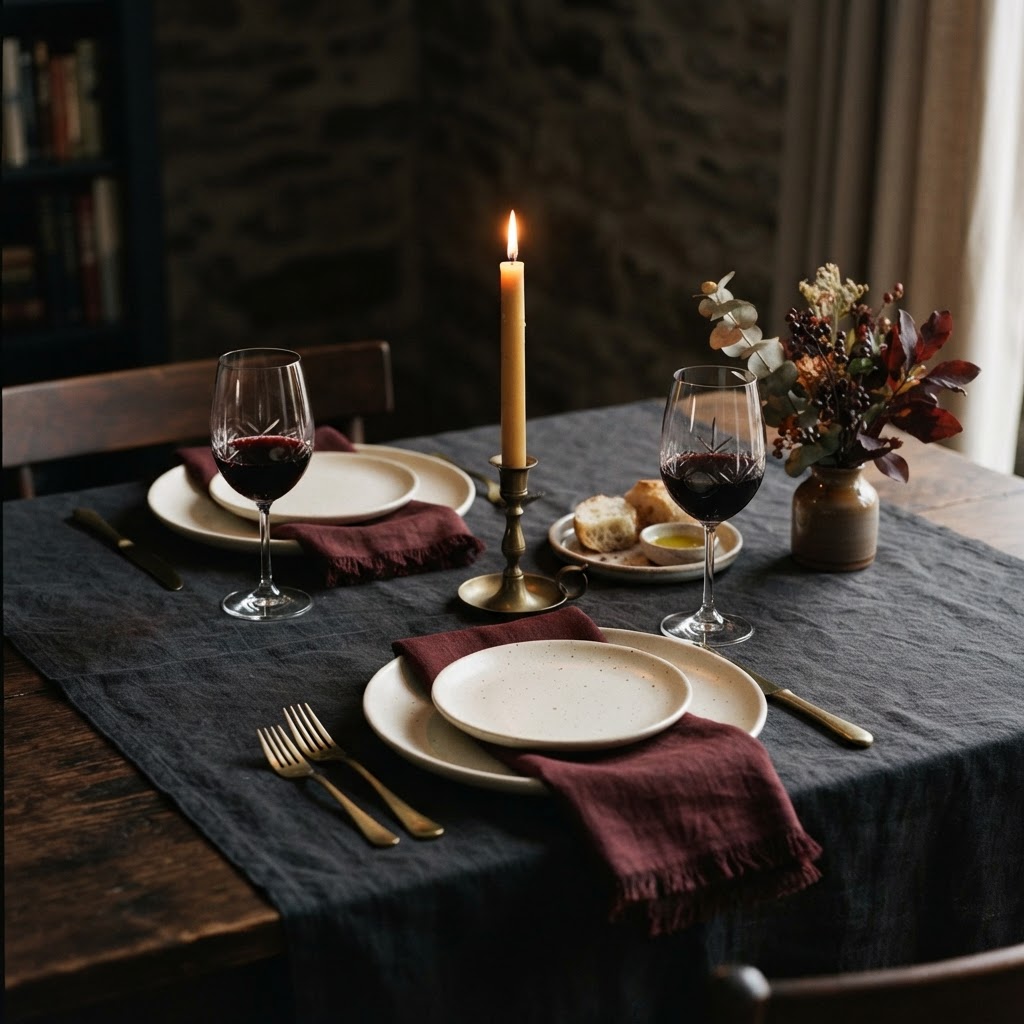
Defending the family dinner has become awkward, because the phrase has been loaded with a kind of sentimentality it never asked for. The family dinner is invoked as a symbol of a simpler time — a vanished ideal of the perfect household, everyone present, everything harmonious, nobody checking a phone.
That is not the dinner being defended here.
The case is not for a perfect family. It is for a ritual — one of the last reliable rituals where people who happen to share a roof are also, for a little while, present to one another.
What the table actually does
A table does something a sofa does not. It arranges people to face each other. It gives the hands something to do so that conversation can happen without the pressure of direct address. It sets a beginning and an end — a meal is started and finished — and inside that frame, almost anything can be said.
Perhaps the dining table was never really about dinner. It was about making a place where the day could be told.
Children learn to take turns at a table. They learn that a story has a shape, that a question can be asked, that an adult will sometimes laugh at the thing they said. None of this is trivial. It is the elementary education of being a person among people.
Without romanticising
The real family dinner is not a painting. It is the burnt edge, the late arrival, the argument about who is clearing, the sulking teenager, the conversation that goes somewhere uncomfortable. It is frequently imperfect and occasionally miserable.
And it still matters. Perhaps it matters because it is imperfect — because it is the place where the actual family, with all its friction, practices being together. A household that cannot manage an imperfect dinner together will struggle with the harder things.
Somewhere to return to
A ritual is not valuable because it is magical. It is valuable because it is reliable. The dinner happens whether the day was good or bad. It is the thing that is still there when everything else has moved. For a child, and frankly for an adult, that reliability is a kind of shelter — a fixed point in a day that may have gone sideways.
The table is the thing that is still there when everything else has moved.
Families come in every configuration. The table does not require a particular kind. It requires only that people return to it, regularly, and that they are reasonably present when they do.
The small things that hold
It does not need to be elaborate. A shared meal of anything, eaten without screens, at roughly the same time, on more days than not — that is enough. The grand version is lovely, and we have written about it elsewhere. But the heart of the thing is not the cooking. It is the returning.
Why it is worth conserving
We did not stop eating together because food got worse. We stopped because life got faster, screens got more interesting, and the table — which asks something of us — lost ground to things that ask nothing.
The loss is quiet and cumulative. You do not notice it on any given evening. You notice it over years, in a household that has slowly stopped having a place where the day gets told.
Perhaps the dining table was never really about dinner. It was about making a place where the day could be told. And that — not the menu, not the tableware — is what is worth conserving.
Social Hook
PERHAPS THE DINING TABLE WAS NEVER REALLY ABOUT DINNER.
Campaign Artwork